
Why a Miniature Guitar Is a Collector's Work of Art, Not a Toy
A miniature guitar can be more than a novelty. Here is how scale, materials, hand fabrication, and provenance shape a collector's piece.
Rob Gwynn's miniature guitars are static display works made for collectors, not toys or playable instruments. Their value comes from the accuracy of the scale, the selected woods and metals, the hand-fabricated details, and the time required to make each piece.
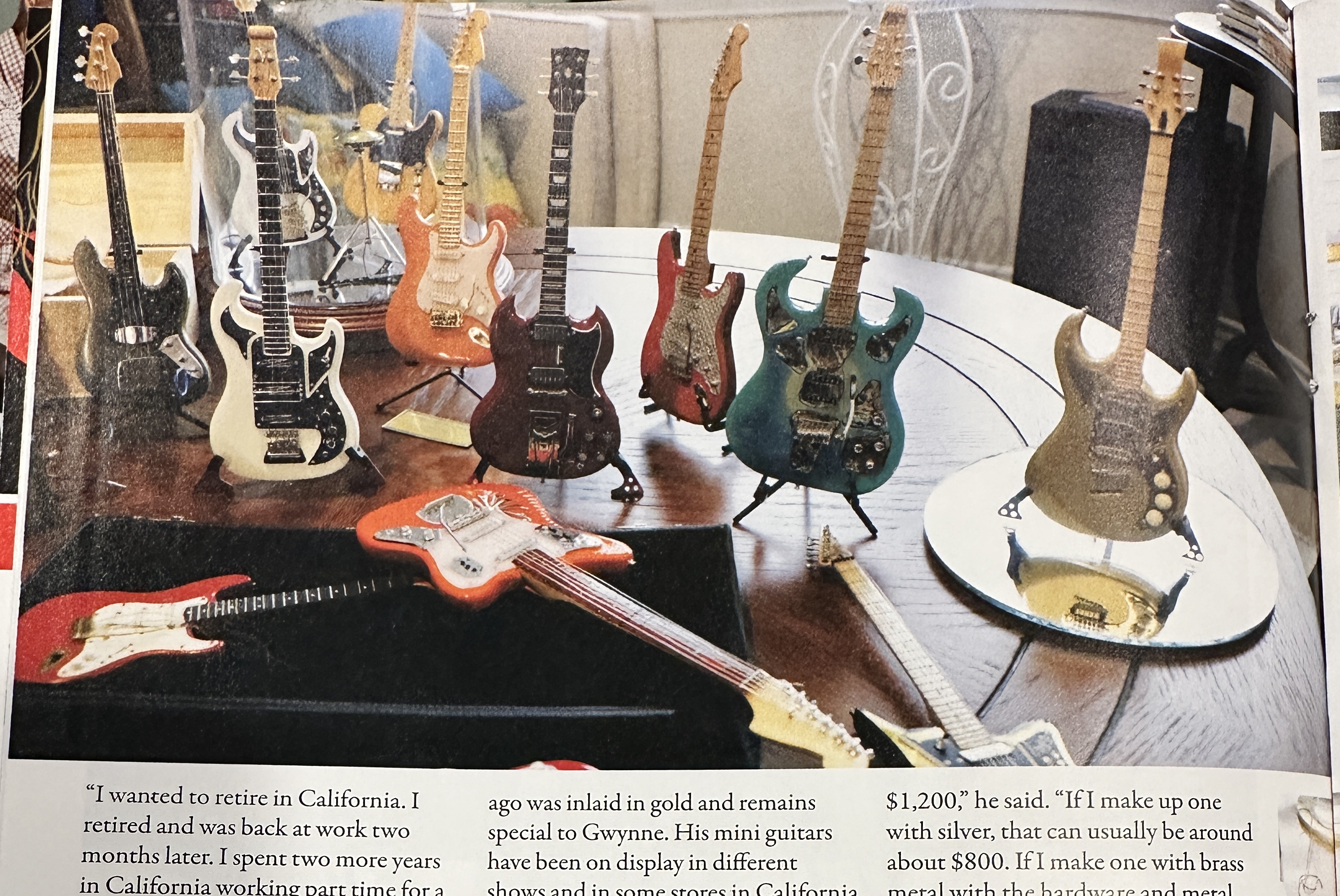
Start with scale
A miniature guitar for collectors is not defined by size alone. It is defined by the care visible in the small decisions: the accuracy of the silhouette, the choice of wood, the metal used for the hardware, and the patience required to finish details that most people will only notice when they lean closer.
Materials are part of the story
Rob Gwynn's miniature guitars are static display works, not toys and not playable instruments. Each is approximately 8.75 inches long and built for a collector who wants a connection to a particular guitar style, musician, memory, or piece of craftsmanship.
Scale is the first part of the experience. A well-made miniature preserves the proportions that make the full-size instrument recognizable. The curve of a Telecaster body, the horns of an SG, the offset shape of a Jazzmaster, or the lines of a Burns design still need to feel right even when the object fits in one hand.
Hand fabrication is provenance
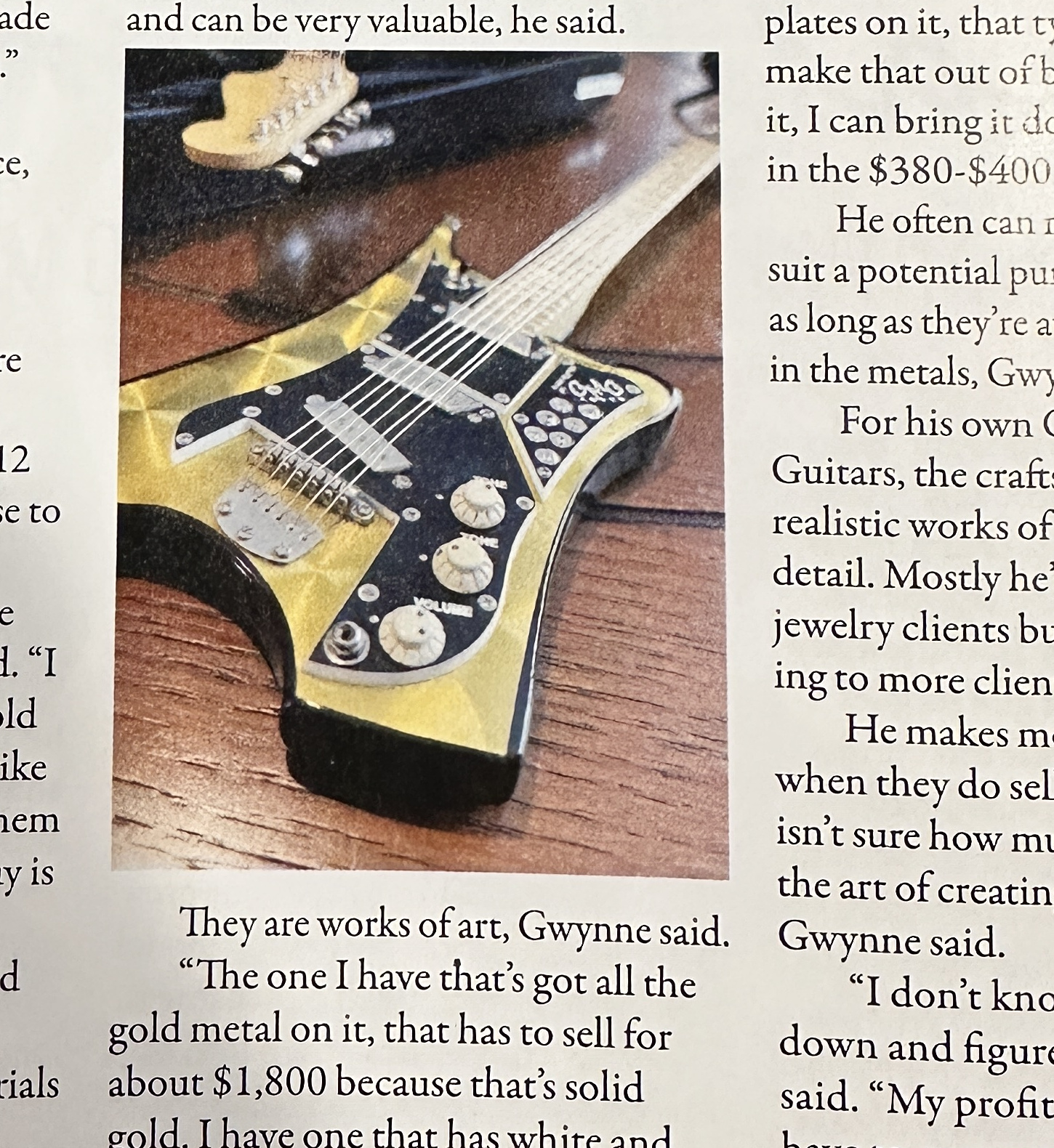
Then the eye moves to the materials. Rob works with woods including maple, zebra wood, mahogany, Texas mesquite, and rosewood. Hardware may be brass, sterling silver, or genuine gold, depending on the piece. Some guitars include shell, cubic zirconia, semi-precious stones, or diamonds. These choices affect the appearance, the process, and the price.
Material language matters in fine craft. Gold foil is not solid gold. A gold-colored accent is not a gold component. Silver-colored metal is not sterling silver. A collector should be able to read the materials list and understand exactly what was selected for the piece.
What determines price
The next distinction is how the object is made. Rob does not start with a mold that produces a series of identical bodies. He shapes the wood, fabricates the hardware, builds the neck, places the frets, installs the strings, and assembles the details by hand. The work comes from a professional goldsmith whose career has been spent turning raw materials into finished objects.
Choosing a piece
That provenance gives the piece a story beyond the model it represents. A collector is not only acquiring a tiny guitar. They are acquiring the record of a maker's decisions: why a particular wood was chosen, how the hardware was formed, which detail required the most attention, and how the final finish was achieved.
Rob's current public starting guidance reflects those choices. Pieces with sterling-silver hardware start at $1,100, while pieces with genuine gold start at $1,850. Final pricing varies with the wood, metal, gemstones, complexity, and customization. Historical prices printed in earlier magazine coverage should not be treated as current offers.
For a collection, the best place to start is the guitar itself. Which model has meaning to the recipient? Is the goal a familiar shape, a particular wood, sterling detail, genuine gold, or a custom replica based on a personal instrument? Those questions give Rob a useful starting point for an inquiry.
Display the work
These pieces also make thoughtful gifts for musicians and collectors because they do not compete with the full-size instrument collection. A miniature guitar does something different. It turns a musical connection into a display object that can live in an office, study, music room, or case.
Display should be treated as part of ownership. Keep the piece stable, protected from dust, direct heat, and harsh sunlight, and follow Rob's care guidance for the selected materials. Handle it by the base or edges when possible, especially when the guitar includes delicate details or stones.
A collector's work of art earns its place through what it rewards over time. From across the room, Rob's guitars bring color and shape to a display. Up close, they reveal the bridge, strings, frets, hardware, grain, and evidence of handwork that make the piece worth studying.
Browse the collection for available pieces, or contact Rob to discuss a custom miniature guitar built around a model, material combination, or personal story.
People Also Asked
Q: Are miniature guitars collectibles or toys?
Rob Gwynn's miniature guitars are collectible display works, not toys and not playable instruments.
Q: How much do Rob Gwynn's miniature guitars cost?
Current public starting guidance is $1,100 for pieces with sterling-silver hardware and $1,850 for pieces with genuine gold. Final prices vary by materials and complexity.
Q: Can I request a custom miniature guitar?
Yes. Collectors can contact Rob with the model, materials, and details they have in mind. Custom work is quoted after the design is discussed.